
'The contours of the trade deal need to be reworked now.'

These new tariffs were imposed by Trump on all countries, including India, on February 24 for 150 days following a Supreme Court verdict that struck down his earlier sweeping levies.

India and New Zealand have signed a comprehensive Free Trade Agreement (FTA) aimed at significantly boosting bilateral commerce and investments, providing duty-free access for 100 per cent of India's exports to New Zealand and securing duty-free inputs for India's manufacturing sector.
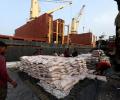
Indian exporters are unlikely to receive direct tariff refunds from the US's $166 billion payout, but the rollback of reciprocal duties is enhancing their pricing power and improving order prospects, particularly in textiles, apparel, and engineering goods.
India and the US have reported positive progress in recent trade talks in Washington, agreeing to maintain engagement to finalise a bilateral trade agreement, which now requires recalibration following new US tariffs.

A US trade representative described India as a 'tough nut to crack' during trade agreement negotiations in Washington, highlighting India's protection of its agricultural markets and the ongoing discussions on specific commodities.

India and the US have agreed to a trade deal that will see Washington reduce reciprocal tariffs on Indian goods from 25% to 18%, according to US President Donald Trump. The deal also includes commitments from India to reduce tariffs and non-tariff barriers against the US and to increase purchases of American products.
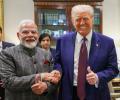
The agreement addresses non-tariff barriers and promotes increased trade in technology products and cooperation between the two countries.
Chief negotiators from India and the US are set to begin three-day talks in Washington to recalibrate the bilateral trade agreement (BTA) framework, following significant changes in the US tariff landscape, including a new 10 per cent tariff imposed on all countries.

Finance Minister Nirmala Sitharaman on Wednesday said global trade is increasingly "getting weaponised" through tariffs and other measures, and India will have to negotiate its way carefully. She said that the overall strength of the economy will give the country an added advantage.

US President Donald Trump is set to visit China for talks with President Xi Jinping on trade, global issues, and the Gulf war. The visit aims to address trade frictions and other key issues, with high expectations for progress.

India and the United States are committed to finalising an interim trade agreement, despite recent challenges including the US imposing a blanket 10 per cent surcharge and India's decision to wait for a new global tariff architecture. The US Trade Representative's annual report highlights India's maintained high import tariffs and various non-tariff barriers across several sectors.

Despite a sharp increase in import duties on gold and silver to 15 per cent, the precious metals are trading at significant discounts in the domestic market, with gold seeing discounts of up to $200 an ounce and silver up to $6 an ounce.

US President Donald Trump received a red carpet welcome in Beijing for talks with Chinese President Xi Jinping on trade, the Iran war, and other key issues. The visit underscores the importance both nations place on their relationship amid ongoing tensions.

Donald Trump says several issues were settled during the final day of talks with Xi Jinping covering trade, tariffs, and diplomacy.

External Affairs Minister S Jaishankar and US Secretary of State Marco Rubio discussed cooperation in trade, critical minerals, nuclear energy, and defence, reaffirming commitment to a free and open Indo-Pacific.

Finance Minister Nirmala Sitharaman stated that it is premature to comment on the tariff changes announced by the United States, adding that the commerce ministry is currently reviewing the situation.
India must focus on building enduring national capabilities and economic sovereignty in the face of shrinking space for rules-based trading, anti-immigrant stance, weaponization of energy sources and growing use of export controls in critical sectors, the Economic Survey said on Thursday.

In a major setback to Trump's pivotal economic agenda for his second term, the US Supreme Court, in a 6-3 verdict written by Chief Justice John Roberts, ruled that the tariffs imposed by the president on nations around the world were illegal.

The ruling is expected to have wide-ranging consequences for global trade, businesses, consumers, inflation trends and household finances across the country.

Indian benchmark equity indices, Sensex and Nifty, experienced a decline in early trade, ending a three-day rally, primarily due to heavy selling in IT stocks and concerns over prolonged instability in West Asia.

A US lawmaker has criticized President Donald Trump's tariff policy on India for purchasing Russian oil, urging him to reverse it immediately.

India will now face a lower reciprocal tariff of 10 per cent, down from 25 per cent, after US President Donald Trump announced a new global levy on items imported into America in the wake of the Supreme Court verdict against his sweeping duties on several nations.

The United States Trade Representative (USTR) office on Wednesday launched a sweeping investigation into manufacturing and industrial practices in 16 economies, including India, citing concerns over what it calls 'structural excess capacity' that could distort global trade. Announcing the move on a White House press call, Jamieson Greer said the probe would be conducted under Section 301 of the Trade Act of 1974, one of Washington, DC's most powerful trade enforcement tools.

Trump said that the decision would be "immediately" in effect and that the "order is final and conclusive."
The official also advised all the trade partners to abide by the trade deals. The new 10 percent global tariff is part of Trump's protectionist trade agenda, aimed at addressing balance-of-payments issues and unfair trade practices.

Following a Supreme Court setback, Donald Trump has announced an increase in global tariffs from 10% to 15%, impacting international trade relations and raising concerns about economic repercussions.
India and the US have decided to reschedule their meeting to finalize the interim trade pact due to recent developments and implications, including changes in US tariffs.

US President Donald Trump asserted that the trade deal with India remains intact despite a Supreme Court ruling against his tariffs, while also claiming he used tariffs to stop a war between India and Pakistan.
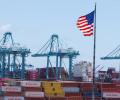
Indian exports to the US will face a 10% tariff, down from 25%, for 150 days following a US Supreme Court ruling. However, uncertainty persists due to potential further tariff hikes and long-term implications.

'There is a lot of euphoria in the country after a trade agreement is signed. But it is an illusion for us. What is more important is making it real.'

'India should understand that we are not going to make the same mistakes with India that we made with China 20 years ago.'

US President Donald Trump will visit China from May 13 to 15 at the invitation of President Xi Jinping. The visit occurs amidst global tensions, including the war in West Asia and trade disputes between the US and China. Discussions are expected to cover China-US relations, world peace, and economic issues.
The verdict marks a notable shift from a series of recent wins for Trump at the Supreme Court.

Trump administration will use "alternative legal authorities" to enforce tariffs on the countries, assuring that the tariff revenue will remain unchanged.

US President Donald Trump and Chinese President Xi Jinping met in Beijing to discuss a range of issues, including trade frictions and the war in Iran.

'It was diminishing even before Trump came to power.' 'The US was at the centre of the global economy. That position is going to become less and less important and less central.'

The Asian Development Bank (ADB) on Wednesday lowered India's growth forecast for FY26 to 6.5 per cent from 6.7 per cent on account of trade uncertainty and higher US tariffs that are expected to impact exports and investment. Despite the downward revision from the April 2025 Asian Development Outlook (ADO), India remains one of the fastest-growing major economies in the world.

The Swadeshi Jagran Manch (SJM) is advocating for the termination of the moratorium on customs duties for electronically transmitted digital products, arguing that it hinders self-reliance, causes revenue losses, and restricts India's ability to tax emerging technologies like AI.
Indian officials will visit the US to finalise the legal text for an interim trade agreement, expected to be signed in March, focusing on duty concessions and reciprocal tariffs.
 © 2026 Rediff.com - Advertise with us - Disclaimer - Privacy Policy - Sitemap - Feedback - About us - Terms of use - Grievances